


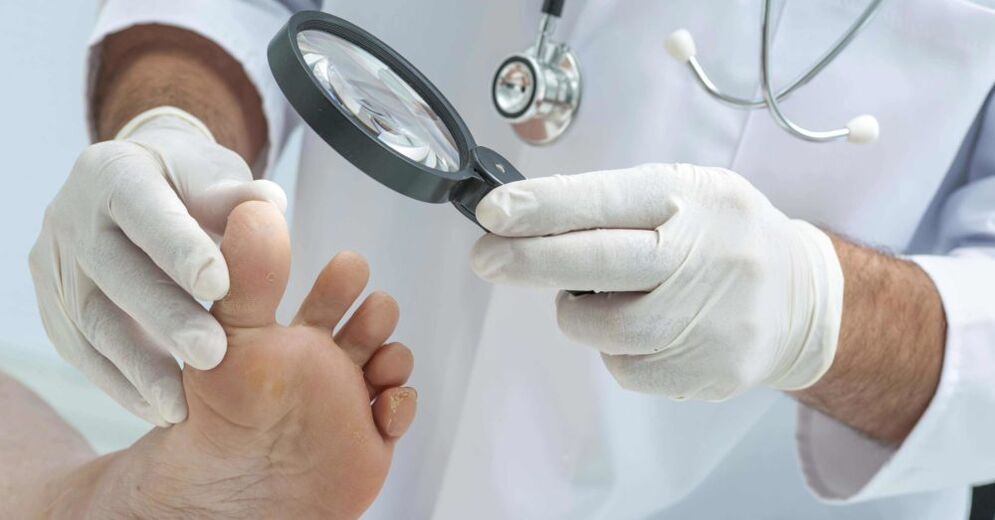
Infection of the skin or nail plate with a fungus (or scientifically, mycosis) leads not only to aesthetic and moral discomfort, but can also cause serious health problems in general.In addition to complications, fungal disease is characterized by a high rate of disease relapse and long-term therapy.
There is only one route of infection with the fungus - from a carrier of mycosis to a healthy person.Fans of saunas, baths and swimming pools are at risk.A warm and humid environment is a favorite place for the fungus to exist.Uncleanliness and violation of sanitary standards by the manicurist-pedicurist can also lead to infection.Especially often, mycosis enters the body through trauma to the nail fold.
Symptoms of mycosis
Mycosis is insidious in that it can be quite difficult to notice its first symptoms.The course of onychomycosis (fungal infection of the nail plates) depends on the level of the body's defenses.The higher the immunity, the milder the form of the disease.There are three stages of development of mycosis on the nails:
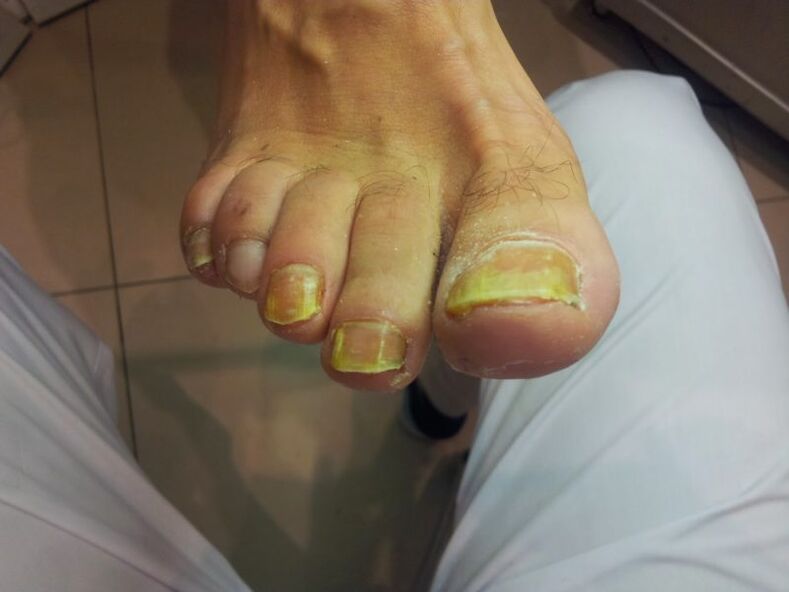
- Normotrophic – the initial stage of the development of the disease.The shape of the nail does not change; small areas of white or yellowish tint appear on it;
- Hypertrophic - a smooth and solid nail plate begins to delaminate.The color changes from healthy pink to yellow.The structure of the nail changes - it becomes thick and loose;
- Atrophic - The development of mycosis destroys the nail plate, it becomes extremely thin and brittle.The process of destruction of the diseased nail begins.
Important!
The appearance of at least one symptom is a reason for mandatory consultation with a doctor!
For many, the appearance of fungus on the fingernails or toenails seems to be a minor problem, which can be dealt with independently using folk remedies or pharmaceutical drugs.However, therapy for mycoses requires an integrated approach and determination of the pathogen strain.This can only be done in a hospital.And, therefore, visiting a doctor cannot be avoided.
What needs to be done to cure mycosis
Let's consider a step-by-step algorithm of actions in the event of a fungus:
- It is necessary to contact a specialist immediately after detecting the first signs of a fungal disease.We will consider the issue of jurisdiction of mycoses below.But, looking ahead, let us clarify that you need to make an appointment with a mycologist or dermatologist;
- After an initial examination, the specialist makes a presumptive diagnosis of mycosis and prescribes additional clinical studies;
- Based on the test results, the doctor clarifies the diagnosis, determines the strain of the fungus and writes out prescriptions;
- Get ready for a long, grueling fight against fungus.The duration of therapy for mycosis is often six months or more.It is not advisable to stop the course of treatment at your own discretion, so as not to have to deal with a relapse of mycosis, which has adapted to the medications taken and requires additional therapy.
Which doctor treats toenail fungus
Often a patient with a fungus is at a loss: which doctor should he contact?Which doctor deals with foot and nail fungus?Dermatologist or mycologist?Let's look at it in detail.
Who is a mycologist?
A mycologist is a doctor who treats fungal pathologies of the nail plates and skin.All varieties of fungus are his specialization.He knows everything about fungus.
Within his competence:
- Therapy of mycoses and other diseases of the nail plates, hair and skin;
- Clinical studies and clarification of diagnosis;
- Prevention of fungal pathologies.
However, the problem is that such a specialist usually works in private paid clinics and in large cities.And mycosis knows no boundaries.What to do if there is no mycologist in the clinic?
In this case, a regular dermatologist will help you cope with the problem.It doesn't matter what the name of the doctor who will treat you is.His experience and qualifications are much more important.A dermatologist will conduct an initial examination and, if necessary, write a referral to a mycologist.In most cases, a dermatologist becomes a doctor treating fungus in municipal institutions in villages and provincial towns.
The main thing is not to self-medicate, do not listen to the advice of neighbors and friends, and do not delay going to the doctor.Mycosis of the nails is insidious and self-medication can do more harm than good.
Initial examination
Timely contact with a specialist will prevent the risk of mycosis spreading.The initial examination begins with a survey of the patient’s complaints, clarifying the time of occurrence of the nail plate defect and the external factors that accompanied it.

After examining the affected areas, the attending physician will indicate the preliminary name of the disease and offer to undergo a list of necessary tests.
Typically, the patient has to undergo the following studies:
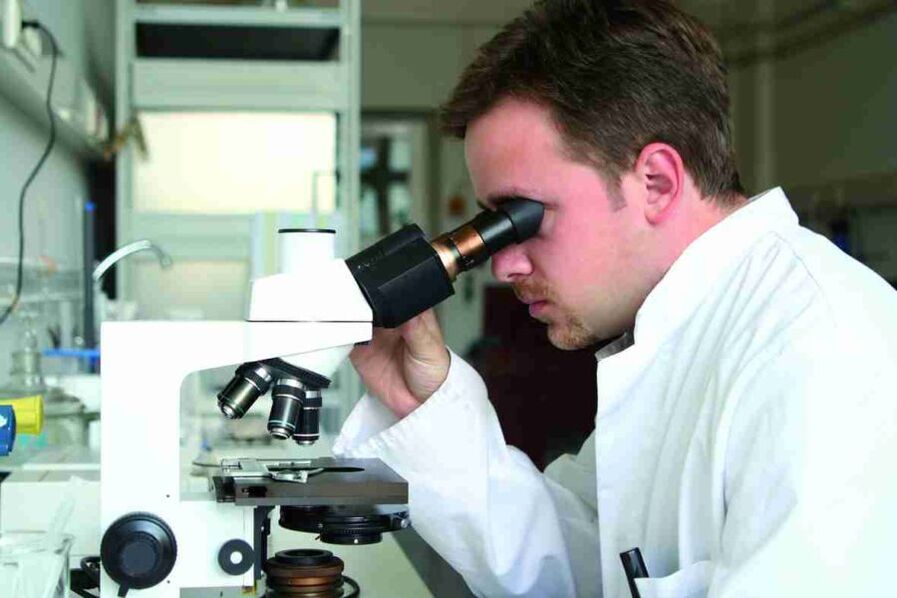
- Method of microscopic analysis of a particle of a damaged nail plate.It's called the KON test.To conduct the study, a particle of the nail plate is immersed in a thirty percent potassium solution.The processed scraping is then examined under a microscope.This method allows the doctor involved in the treatment to determine whether there is a fungus, but does not make it possible to determine its strain;
- PCR – diagnostics.Polymerase chain reaction is one of the most sensitive techniques that allows you to determine the strain of the pathogen.
Which doctor will deal with further therapy depends on the strain of the fungal disease and the severity of its course.The decision on mandatory treatment by a mycologist is made in the case of severe forms of mycoses that are resistant to the main groups of drugs.
The course of treatment for mycosis is long and requires an integrated approach.Therapeutic measures depend on the extent of the lesion and the duration of the disease.
Treatment of nail fungus
The insidiousness of mycotic lesions lies in their ability to adapt and become immune to the action of pharmaceutical drugs.This leads to the fact that drugs that have been proven over the years lose their therapeutic effect on the fungus.
And any treatment of fungal diseases becomes a purely individual event with a developed treatment regimen for each patient individually.A combination of two or three different medications helps achieve a good result.
Pharmacy comes to the aid of mycologists, producing tablets, injections and droppers for systemic treatment, as well as ointments, creams, gels and medicinal varnishes for topical use.
Important!
Do not try to prescribe a course of treatment for mycosis yourself.All antimycotics are highly toxic and have a lot of contraindications.
The fungus can change its location in the human body: disappear in one area and appear in another.Only control by a mycologist will help cope with the disease, and not allow it to transform and move deeper into the body.
Mycosis therapy
Typically, the recipe for treating fungal nail infections consists of:
- Medicinal varnish, antimycotic cream or ointment;
- Tablet drugs.The choice among the drugs is determined by their side effects, age, medical history of the patient and his immune defense;
- Means for removing infected nail plates are prescribed for severe or advanced forms of mycoses.This conservative treatment method replaces surgery and allows a healthy, undamaged nail plate to grow back.
During therapy, repeated clinical studies are prescribed to evaluate the effectiveness of treatment and adjust the drugs.The third time tests are prescribed after getting rid of visible symptoms of the fungus.And for the fourth time - two to three months after the end of the course of therapy.
The insidiousness of mycosis lies in its high contagiousness, rapidity of spread and duration of therapy.To avoid relapse of the disease, it is necessary to take measures to prevent re-infection of the patient and his family members.
Preventive measures for the patient and his family members
Failure to comply with simple hygiene standards can lead to rapid infection of loved ones living with the patient.
To avoid this, you need to:
- Provide each family member with personal hygiene items - a washcloth, slippers, a towel;
- When visiting saunas, steam baths, swimming pools, do not forget about rubber shoes.It will protect your feet from onychomycosis;
- Always have nylon or cotton socks with you for trying on a new pair in a shoe store;
- The use of medicinal varnishes and aerosols can provide additional protection for your feet and nails;
- Give preference to shoes made of genuine leather rather than their synthetic counterparts.This will give the feet the opportunity to breathe, prevent excessive sweating and the development of mycosis;
- If you experience an unpleasant odor or profuse sweating of your feet, you should consult a doctor.This will help to notice the pathology in the first stages, and treatment will be easier and faster.
A balanced diet will help increase the body's resistance to infections.Include foods high in vitamins A and B, calcium and iodine.